

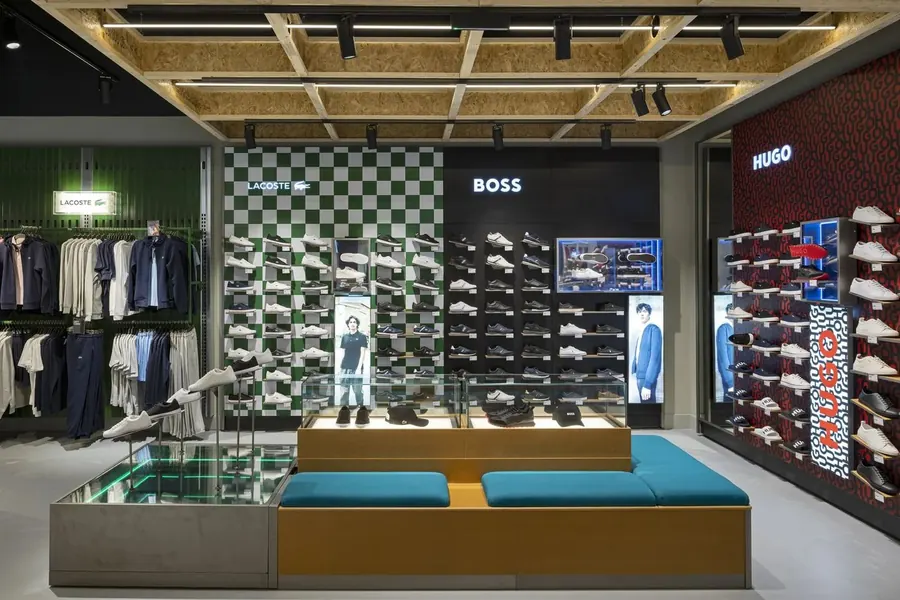
Guide
Cat A, Cat B and shell and core,
explained properly.
In short
A Cat A fit-out is the landlord's work: it takes a bare shell to a finished but empty space, with raised floors, ceilings, lighting, heating and cooling, fire detection and blinds. A Cat B fit-out is the tenant's work: it turns that empty space into their office, with partitions, meeting rooms, tea points, finishes, furniture, IT and branding. Shell and core comes before both, and is just the structure, the envelope and the core.
The three terms get used loosely, and on a bad day they get used interchangeably. They are not the same thing, they are not paid for by the same party, and confusing them is how a budget goes wrong before anyone is on site.
This is how we scope them on live projects, as the principal contractor delivering both Cat A and Cat B across the UK and Ireland.
The three stages
Shell and core, then Cat A,
then Cat B.
They run in order, and each one hands over to the next. Knowing which stage a building is at tells you who is paying for what happens next.
-
01 Developer pays
Shell and core
The building, and nothing in it.
- Structural frame, floors and roof
- External envelope, cladding and glazing
- The core: lifts, stairs, risers, toilets
- Main plant and incoming services
- Finished reception, if the scheme has one
-
02 Landlord pays
Cat A
Finished, lettable, and completely empty.
- Raised access floors, or a screed and floor boxes
- Suspended ceilings, or a finished exposed soffit
- Lighting to a standard grid
- Heating, cooling and ventilation distribution
- Fire detection, alarm and sprinklers
- Blinds to the windows
- Painted perimeter walls and columns
-
03 Tenant pays
Cat B
The bit that makes it their office.
- Partitions, offices, meeting rooms and breakout
- Tea points and kitchens
- Floor, wall and ceiling finishes
- Feature and task lighting
- M and E adapted to the actual layout
- Data cabling, comms room and AV
- Furniture, joinery and storage
- Branding, signage and front of house
Who pays for what
The bit that decides
your budget.
None of this is fixed by law. It is convention, and convention is negotiable — but only before heads of terms are signed.
| Stage | Normally paid by | In practice |
|---|---|---|
| Shell and core | Developer | Priced into the building. The tenant never sees this as a separate cost. |
| Cat A | Landlord | Usually the landlord's cost, recovered through the rent. On a pre-let it can be negotiated into the deal. |
| Cat B | Tenant | The tenant's cost, though it is commonly offset by a rent-free period or a landlord capital contribution. Worth negotiating before heads of terms are signed, not after. |
| Reinstatement | Tenant | At lease end most leases require the Cat B to come back out and the space to be handed back in Cat A condition. That is a dilapidations liability, and it is a cost most tenants forget to budget for. |
And then there is Cat A+
Some landlords now deliver what the market calls Cat A+, or plug and play: a light Cat B done at the landlord's cost so a smaller tenant can move straight in. Partitions, a tea point, furniture and cabling already in place. It lets a landlord chase tenants who cannot fund a full Cat B, and it shortens the letting cycle. It is a commercial decision, not a construction standard, so what is included varies from building to building.
What it costs
Fit-out costs move with location, specification, building age and how much of the M and E survives. Rather than publish a number that will be wrong for your building, we price the actual scope. Call the commercial team and we will give you a range on the first call, and a live projected final account figure at every stage once we are appointed.
Call 01438 900 055Straight answers
Everything else
people ask us.
If your question is not here, it is a five minute phone call.
-
What is a Cat A fit-out?
A Cat A fit-out is the work a landlord does to take a bare shell to a finished but empty, lettable space. It typically covers raised access floors, suspended ceilings, lighting, heating and cooling distribution, fire detection and sprinklers, blinds, and painted perimeter walls. It does not include partitions, meeting rooms, kitchens, furniture, IT or branding.
-
What is a Cat B fit-out?
A Cat B fit-out is the work a tenant does to turn a Cat A space into their own office. It covers partitions, meeting rooms, tea points and kitchens, floor and wall finishes, feature lighting, M and E adapted to the layout, data cabling and AV, furniture and joinery, and branding and signage.
-
What is the difference between Cat A and Cat B fit-out?
Cat A is the landlord's work and produces a finished but empty space that could be let to anyone. Cat B is the tenant's work and produces a space designed around one occupier's way of working. Cat A is generic; Cat B is specific.
-
Who pays for a Cat A fit-out?
The landlord normally pays for the Cat A fit-out and recovers it through the rent. On a pre-let the split can be negotiated as part of the deal.
-
Who pays for a Cat B fit-out?
The tenant pays for the Cat B fit-out, though it is commonly offset by a rent-free period or a capital contribution from the landlord. That is a negotiation to have before heads of terms are agreed.
-
What is shell and core?
Shell and core is the stage before Cat A. It is the structural frame, the external envelope, the core with its lifts, stairs, risers and toilets, and the main plant and incoming services. The lettable floors are left as bare shell.
-
What is a Cat A+ or plug and play fit-out?
Cat A+ is a light Cat B delivered at the landlord's cost so a smaller tenant can move in without funding their own fit-out. It usually includes partitions, a tea point, furniture and cabling. It is a commercial offer rather than a construction standard, so the specification varies between buildings.
-
Do I have to strip a Cat B fit-out out at the end of the lease?
Usually yes. Most leases require the tenant to reinstate the space to Cat A condition at lease end. That is a dilapidations liability and it should be budgeted for at the start of the lease, not discovered at the end of it.
-
How long does a Cat B fit-out take?
It depends on the size of the demise, the specification and how much of the existing M and E can be reused. The programme is set once the scope is fixed; on a live building it is also shaped by access, working hours and what else is trading around you.
Contact us today
Tell us the site,
the scope and the date.
Enquiries go straight to the directors and the sales team at head office — not into a form queue.